
Disclosure: As an Amazon Associate I earn from qualifying purchases. How this site works
Gardening Knee Pads
Knee pads go where you go — useful when you shuffle along a border or path.
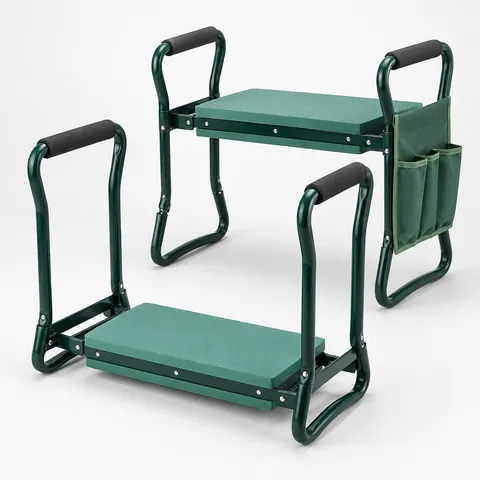 Garden kneeler seats
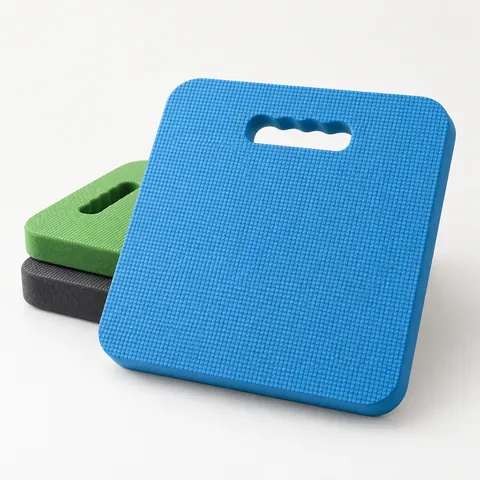 Foam kneeling pads
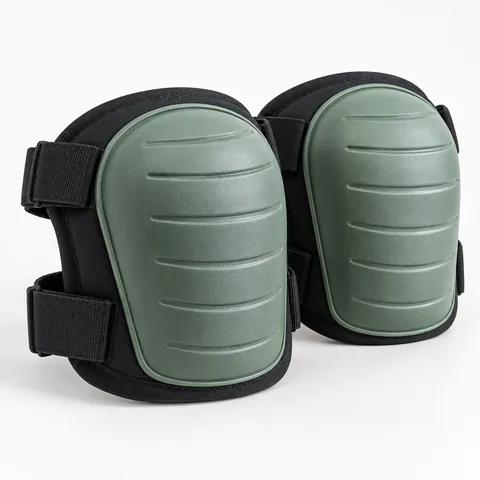 Gardening knee pads
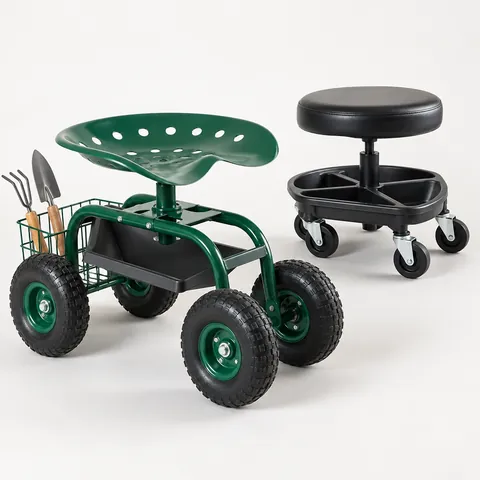 Rolling garden seats
Padding and shells
| Feature | Notes |
|---|---|
| Foam padding | Light and cheap; good for soft soil |
| Gel inserts | Spread pressure on hard surfaces; heavier |
| Soft shell | Grips soil, won’t scratch decking |
| Hard shell | Slides and protects on gravel and paving |
| Straps | Two-strap designs stay in place better than one |
Fit and comfort
- Check strap length for your leg size; wide elastic straps are more comfortable.
- Pads should not slip down when you stand.
- Breathable backing helps on warm days.
- Wash or wipe after use and let them dry.
Browse gardening knee pads and compare strap designs.
How do you choose knee pads for different garden jobs?
Start with the surface you kneel on most, not the label on the package. A pad that feels fine in soft mulch can be uncomfortable on pavers, and a slick hard cap that works on gravel may slide too much on wet grass or sloped beds. If you split your time between surfaces, choose the feature that solves your most painful problem first: pressure relief, grip, or protection from sharp stones.
| Garden job | What to look for | Trade-off to expect |
|---|---|---|
| Planting in soft beds | Low-profile foam, flexible shell, easy-to-clean fabric | Less protection if you drop onto gravel or edging |
| Weeding along paths | Gel or thicker foam, stable cap, straps that do not bunch behind the knee | More bulk when walking between areas |
| Working on gravel | Hard outer shell, dense padding, covered rivets or smooth fasteners | Can feel slippery on decking or smooth stone |
| Pruning from a kneeling position | Secure two-point hold and padding that wraps slightly around the knee | Warmer and less breathable during long sessions |
| Quick watering or deadheading chores | Lightweight slip-on or simple strap design | May need more frequent adjusting |
If you garden in several short sessions, convenience matters. Knee pads that are easy to put on are more likely to be worn for quick tasks. If you usually kneel for long stretches, comfort and strap placement matter more than speed.
How should gardening knee pads fit without pinching or slipping?
A good fit keeps the cushioned center over your kneecap when you kneel, stand, and take a few steps. The straps should hold the pad in place without digging into the back of your leg. If you have larger calves, sensitive skin, or wear thick pants in cool weather, leave extra room for the strap adjustment range.
- Put on the pants you normally garden in, because fabric thickness changes the fit.
- Center the pad over the kneecap while standing.
- Fasten the lower strap first, then the upper strap if the design has two.
- Squat, kneel, and stand back up several times.
- Walk 10 to 15 steps and check whether the pad has rotated or dropped.
- Look behind your knee for strap bunching, pinching, or red pressure marks.
If the pad slides down, tightening the straps is not always the answer. The pad may be too heavy for the strap design, the backing may be too smooth against your pants, or the pad may be shaped for a different leg angle. If the straps must be painfully tight to stay put, choose a different style.
- For slim legs, look for a wide adjustment range and straps that can be shortened without loose ends dragging in soil.
- For larger legs, check that the closure still has overlap when worn over jeans or work pants.
- For sensitive skin, avoid narrow straps, rough hook-and-loop edges, and exposed seams behind the knee.
- For frequent standing and kneeling, choose pads that flex with your leg instead of stiff pads that fight your movement.
What materials hold up to mud, wet grass, and rough ground?
Durability depends on the outer shell, the padding, the stitching, and the closures. The shell takes abrasion, but the straps and attachment points often decide how long the knee pads remain usable. Look closely at where the strap meets the pad; that area gets pulled every time you kneel and stand.
Closed-cell foam resists soaking up water better than open, spongy foam. Fabric-covered pads can feel comfortable, but they may hold moisture and grit unless they are wiped and dried after use. Hard caps should have smooth edges that do not catch on mulch fabric, pants, or deck boards.
- Choose fewer dirt-catching seams if you work in clay soil.
- Pick darker colors if stains bother you, but still clean off grit that can wear through fabric.
- Check hook-and-loop closures for mud buildup, because packed dirt can weaken the hold.
- Avoid leaving knee pads in direct sun or a hot shed window for long periods, which can make some plastics and elastic age faster.
- Rinse or brush off sharp grit before storage so it does not grind into the padding.
Odor usually comes from trapped moisture. After a wet session, open the straps fully and let both sides dry before storing them in a bin or garage cabinet. If the care label allows washing, use mild soap and rinse thoroughly; strong cleaners can leave residue that irritates skin or breaks down elastic.
Are gardening knee pads better than a kneeling pad or garden seat?
Knee pads are the most mobile option. They make sense when you move down a row, work around shrubs, or switch between kneeling and standing often. A separate kneeling pad is better when you stay in one spot and want a larger cushion under both knees. A garden kneeler or rolling seat is better if getting down to the ground or standing back up is the harder part of the job.
| Option | Best use | Main limitation |
|---|---|---|
| Gardening knee pads | Moving along beds, borders, and paths | Straps can rub or slip if the fit is wrong |
| Foam kneeling pad | Stationary planting, potting, and short weeding sessions | You have to carry it and reposition it |
| Garden kneeler with handles | Kneeling when you want support to stand up | Bulkier to move through tight beds |
| Rolling garden seat | Low work on flat paths or between raised beds | Does not help much on uneven or soft ground |
Many gardeners use more than one support. For example, knee pads are useful for a long border, while a foam kneeling pad may be more comfortable at a potting bench or beside one large planting hole. If standing up from the ground is difficult, compare a garden kneeler with handles before buying thicker knee pads alone.
What should you check before buying gardening knee pads online?
Product photos can make knee pads look more supportive than they are, so read the specifications and return details carefully. Focus on fit range, closure type, shell style, and whether the pad is sold as a pair. If the listing does not show the back of the pad or the strap layout, it is harder to judge comfort.
- Confirm the quantity, especially if the wording is unclear about one pad versus a pair.
- Look for strap measurements or a stated fit range if your legs are outside average sizing.
- Check whether the shell is smooth hard plastic, rubber-like, fabric-covered, or soft foam.
- Notice the pad thickness, but do not assume thicker is always better; dense padding can support better than bulky soft foam.
- Review the closure style: hook-and-loop is easy to adjust, while buckles may hold firmly but take longer to fasten.
- Check the return policy in case the strap placement does not match your leg shape.
If you already own knee pads that almost work, use them as a reference. Note whether the problem is slipping, pressure on the kneecap, sweating, or strap irritation. Then choose a replacement that directly fixes that issue instead of simply buying the thickest or cheapest option.
Frequently asked questions
Can I use construction knee pads for gardening?
You can, especially on gravel, pavers, or other abrasive surfaces. Construction pads may be bulkier and may slide more on soil or wet grass, so they are not always as comfortable for planting and weeding in beds.
Why do my knee pads keep sliding down?
Common causes are straps that are too loose, a pad that is too heavy for its strap design, or a slick backing against smooth pants. If tightening the straps causes pinching, the shape or size is probably wrong for your leg.
Are gel knee pads worth it for gardening?
Gel can help spread pressure when you kneel on hard ground, edging, or paving. It also adds weight and bulk, so light foam may be more comfortable if you mostly work in soft soil.
How do I keep knee pads from smelling?
Brush off soil, wipe away mud, and let the pads dry fully with the straps open before storing them. If the care instructions allow, wash with mild soap and rinse well so detergent does not remain in the fabric.
Should gardening knee pads go over or under pants?
Most strap-on gardening knee pads are meant to go over pants so you can adjust them and remove them easily. Wearing them under pants can create pressure points and makes it harder to reposition the pad when it shifts.
Disclosure: As an Amazon Associate I earn from qualifying purchases. This site may earn a commission when you buy through its links, at no extra cost to you. Product details come from public manufacturer information; always check the merchant page for current specifications and prices. We have not hands-on tested the products described here.